
The Foldable iPhone Is Here. Is Your Website Actually Ready For It?
Apple has just unveiled its first foldable iPhone. It is a genuinely big moment for the industry, and it will no doubt dominate tech headlines for weeks.
But away from the excitement, it raises a much more practical question for any business with a website, an ad campaign, or a social presence. If a brand new screen format can launch and catch your design off guard, what does that say about how solid your responsive design actually is in the first place?
This is not really an article about the foldable iPhone. It is an article about a problem that has existed for years and is only going to get more obvious as devices keep changing shape, size and orientation.
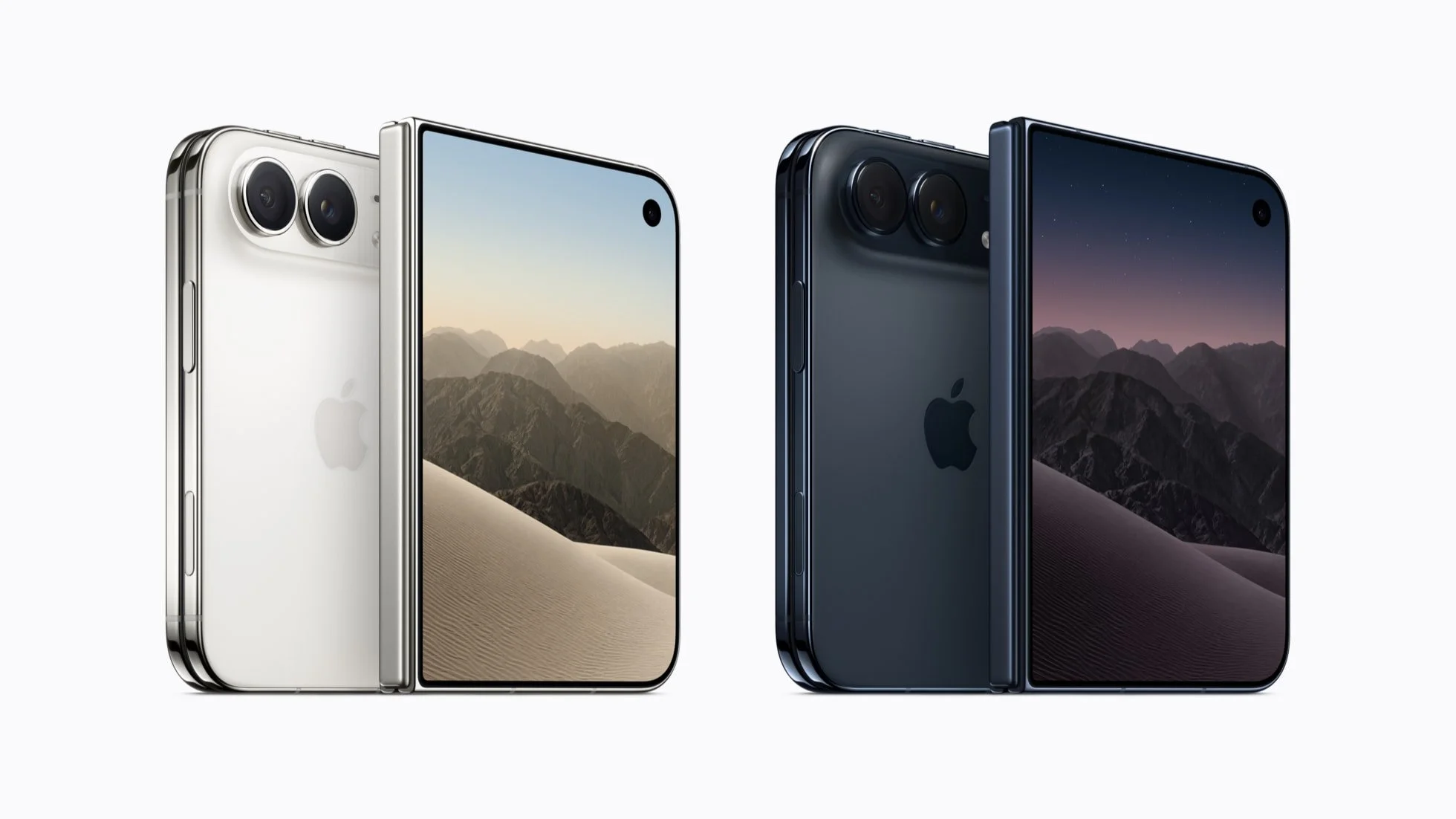
Source: Apple's launch announcement
Responsiveness Was Never Optional
Responsive design is not a nice to have. It is the foundation everything else sits on.
A great logo does not matter if it looks stretched on a tablet. A beautifully written landing page does not convert if half of it disappears below the fold on a smaller screen. A perfectly targeted ad is wasted spend if the page it links to takes ten seconds to load and looks broken on the device it was clicked from.
Every time a new device shape enters the market, whether that is a foldable, a new aspect ratio, or a bigger screen, it puts existing designs to the test. Most businesses find out the hard way that their site was only ever built and tested for one or two standard formats.
That is the real story here. Not the foldable iPhone itself, but what it exposes.
Properly Done Design Takes This Into Account From the Start
This is where a lot of businesses get caught out. Design gets treated as a one off task. Something gets built, it looks good on the designer's monitor, and it goes live. Nobody goes back and checks how it holds up across the full range of screens people are actually using.
Good design is not a single output. It is a process that considers every likely context a customer might be in. Desktop, mobile, tablet, a folded screen, an unfolded screen, portrait, landscape. All of it.
That does not mean redesigning everything from scratch every time a new device comes out. It means building with flexibility baked in from day one, so the foundations can stretch and adapt rather than crack under pressure.
Where AI Fits, and Where It Does Not
AI tools have made it faster than ever to generate a layout, a concept, or a piece of creative. That is genuinely useful, and we use these tools ourselves as part of the process.
But there is an important limit worth being honest about. AI can help generate an idea quickly. It cannot fully replace the design discipline needed to make that idea work properly across every screen a customer might see it on.
Responsiveness is a constraint, not a creative flourish. It comes from careful, considered design work, testing how something behaves as the screen shrinks, grows, folds or rotates. That is a process, not a single prompt. Treating AI as a shortcut that skips this step is how businesses end up with content that looks impressive in a demo and falls apart the moment a real customer opens it on their own phone.
The tools are good. They should support the design process, not replace it.
What This Actually Means for Your Business
You do not need to panic about foldable phones specifically. Adoption will be slow, and it will likely stay a premium, niche device for some time.
What is worth doing is using this moment as a prompt to actually check the basics:
When did you last look at your website on a real phone, not just a resized browser window?
Do your ad creatives get built mobile first, or squeezed down from a desktop version as an afterthought?
Does your enquiry form or checkout actually work cleanly with one thumb?
How do your images and text hold up on a taller or unusually shaped screen?
None of these questions are new. They have been worth asking for years. A foldable iPhone just gives everyone a timely reason to actually ask them.
New devices will keep appearing. The businesses that stay ahead are not the ones chasing every new format. They are the ones who built things properly in the first place, so the format barely matters.