
Why AI has turned small business social media beige, and what the brands still standing out are doing differently.
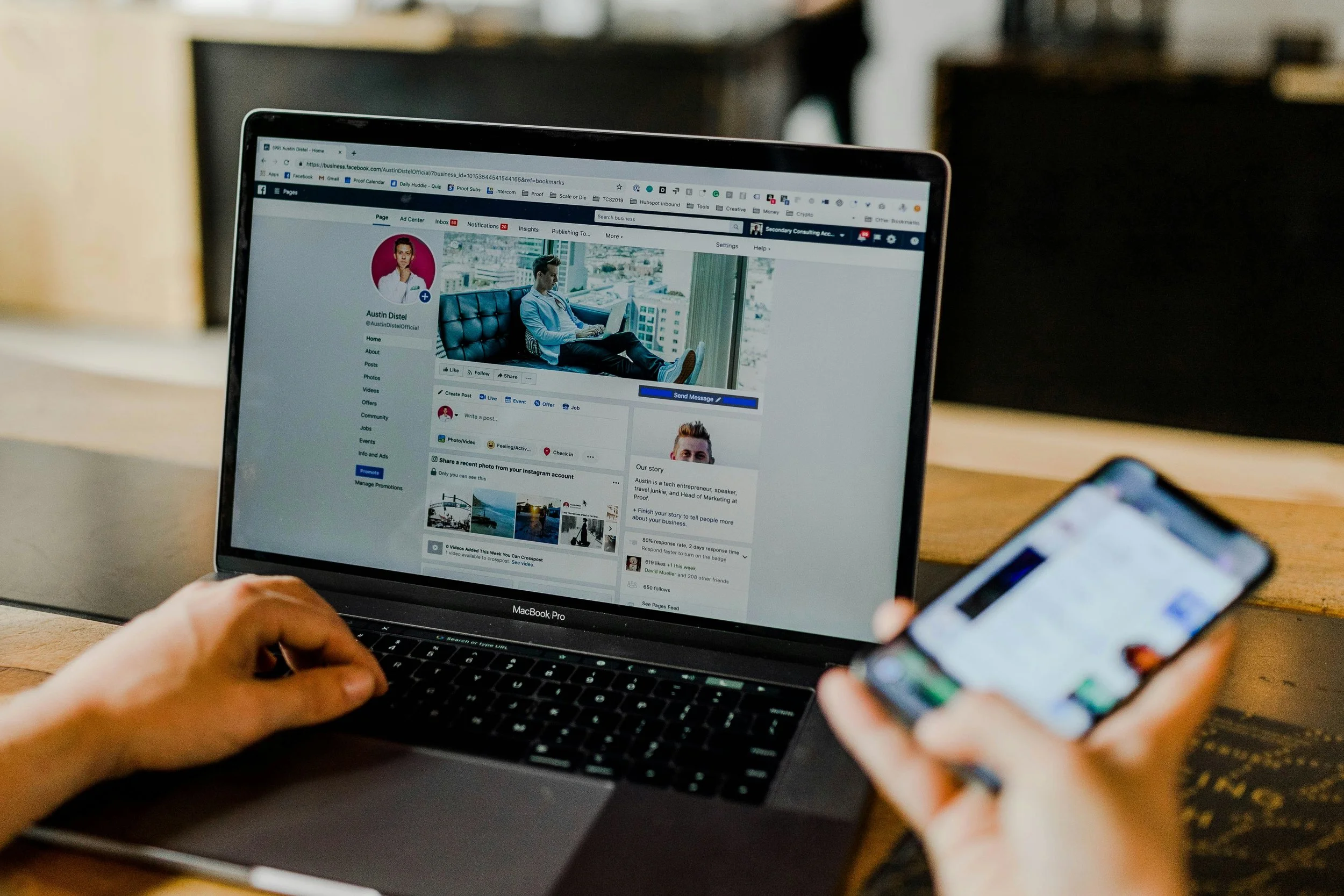
It's a Tuesday morning and I'm scrolling through one of the local business groups on Facebook. It's the one day of the week businesses are allowed to post adverts, and you can tell. Bang, bang, bang. Post after post after post.
A roofer. A cleaner. A mortgage broker. A dog groomer. Two electricians and a glazier. Nearly every one of them is a square graphic with the same soft gradient, the same slightly too-perfect smiling person, and the same list of services stacked down one side. Fully insured. Free quotes. No job too small. Call today.
I scrolled past about thirty of them before I realised something. I couldn't tell you a single business name. Not one.
That's the thing that's been bugging me all year.

The great leveller
I want to be clear before I go any further. I'm not anti-AI. I use it every single day, in my own business and with clients, and I genuinely think it's the biggest leveller small businesses have ever been handed.
A one-man band can now produce in an afternoon what used to need a designer, a copywriter and a social media manager. The tools sitting on a sole trader's phone are the same ones the company twenty times their size is using. That's brilliant.
And people have grabbed it with both hands. A LOCALiQ survey of more than 500 UK businesses found half are now using AI in their marketing, and more than four in five of those are using the same tool: ChatGPT. Capterra found UK businesses were planning to hand nearly half of their social media content over to generative AI by 2026, with that reliance growing faster here than anywhere else in the world.
So the volume has gone through the roof. The question nobody seems to be asking is whether anything else has.
More content, same money
Here's the stat that stopped me in my tracks. The government's own AI adoption research found that three quarters of UK businesses using AI report productivity gains. Great. But only 12% report any increase in revenue. 77% say their revenue hasn't changed at all.
Read that again. We're making more stuff, faster, and most businesses aren't earning a penny more from it.
That lines up exactly with what I see. Most of this content isn't being made by a marketing team. It's being made by the owner, on a Sunday night, around the actual job. AI has made that faster. It hasn't made it better, and it definitely hasn't made it theirs.
Your customers can tell
This is where it starts to cost you. Optimizely surveyed 1,000 UK consumers last month and found 62% now trust marketing content less since brands started using AI. Two thirds think brands are choosing quantity over quality. 57% say they can usually spot AI content, and 72% are more likely to engage with something that feels human.
So the thing that's meant to be saving you time is quietly chipping away at the one thing a small business has over the big players. Trust. Being real. Being the person down the road.
Why everything looks the same
There's a simple reason it's all gone beige. These tools are built to give you the most likely answer, and the most likely answer is, by definition, the average one. Ask for a social post for an electrician in Surrey and you'll get roughly what every other electrician in Surrey got when they asked the same question.
Then, because it's quick and it's free, people cram everything in. Every service, every accreditation, every area covered, all on one 1080 by 1080 square. It's the old A5 flyer all over again. It says everything and nothing at the same time, and the person scrolling past has no reason to stop.
Who's actually standing out
The flip side is that the bar for standing out has never been lower. When everyone looks the same, looking like yourself is a competitive advantage.
The small businesses I've seen grow this year aren't the ones posting the most. They're the ones with something original. The owner on camera explaining a job in thirty seconds. Real photos of real work, in real local streets. The team, the van, the mess and the finished result. Local creators who actually use the product, talking about it in their own words. None of it is polished. All of it is unmistakably them.
They're still using AI, by the way. They're just using it behind the scenes for planning, ideas and first drafts, not as the face of the brand.
Four things you can do this week
If you're reading this and recognising your own feed, here's where I'd start.
Pick one thing you want to be known for. Not ten. One. The thing you'd want a customer to say about you when they recommend you to a mate.
Put a real person in it. You, your team, your customers. A slightly wonky phone video of a real person will beat a perfect AI image nine times out of ten.
Post less, mean more. Three posts a week that are genuinely yours will do more than daily filler that looks like everyone else's.
Do the logo test. Cover your name and logo on your last five posts. Could they belong to any business in your trade? If the answer's yes, that's your problem right there.
The good brands are getting drowned out
What frustrates me most isn't the AI. It's that genuinely good businesses, the ones doing great work and treating their customers properly, are being drowned out by whoever can churn out the most content. That's not how it should be.
The answer isn't to out-post them. It's to be the one thing in the feed that couldn't have come from anyone else.
I've put together a free Social Content Checklist to help you do exactly that: a simple way to sense-check every post before it goes out, and build a plan that actually sounds like you. Download it below. And if you'd rather talk it through, you know where I am.